How to clean upholstery depends first on the fabric and how dirty it is. A fresh spill on a reception sofa may only need spot treatment, while overall greying, embedded dirt or several old stains usually call for a deeper clean.
But before reaching for detergent or water, check the upholstery care instructions. This is because using the wrong cleaner can leave water marks, affect the fabric or push dirt further into the material. For larger office sofas and benches, cleaning evenly also takes more time than treating a single seat.
Step 1: Check the Upholstery Cleaning Code
The care label tells you what to clean upholstery with. Commercial seating commonly uses the following codes:
| Code | Cleaning Method |
| W | Water-based upholstery cleaner |
| S | Solvent-based cleaner only |
| WS | Water-based or solvent-based cleaner |
| X | Vacuuming or light brushing only |
If a reception sofa or upholstered bench has no care label, check the manufacturer’s cleaning instructions first. If you cannot identify the material or the correct cleaning method, avoid experimenting with water or solvents and have the upholstery assessed professionally.
Step 2: Vacuum Before You Spot Clean
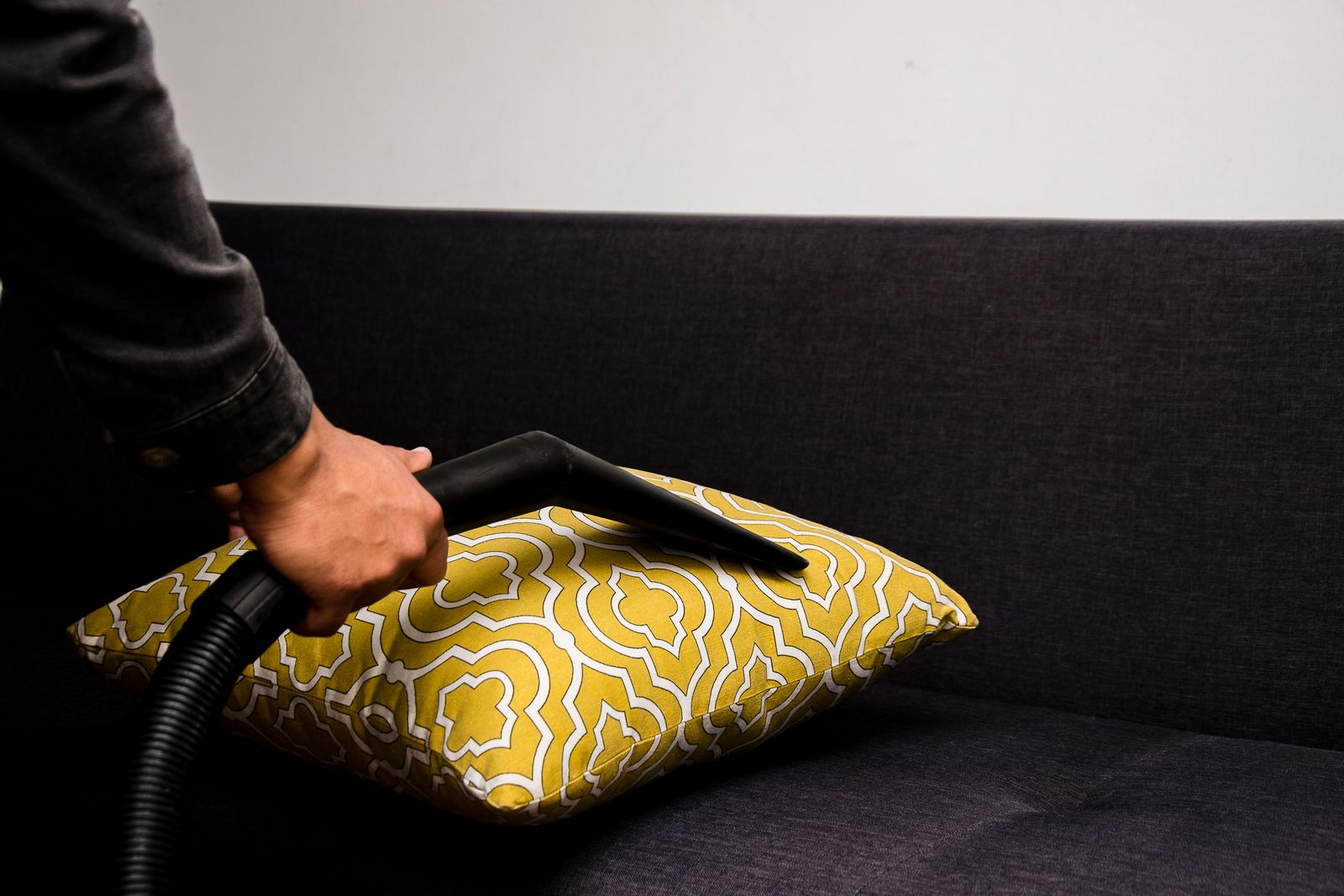
Before treating any stains, thoroughly vacuum the sofa or bench. Go over the seat, backrest and armrests, then use a crevice attachment along seams, tufting and between cushions where crumbs and dust tend to collect.
While you are at it, take your time with larger pieces. A quick pass over the visible surface can leave plenty behind in the joins and edges.
Once the loose dirt is gone, it is much easier to see which marks actually need spot cleaning and which areas may need a deeper clean.
Step 3: Spot Clean Fresh Stains
For a fresh spill, blot the area with a clean cloth rather than rubbing it into the fabric. Work from the outside of the stain towards the centre to reduce spreading.
If the upholstery is W-coded, use a water-based upholstery cleaner as directed. Apply the product to a cloth instead of pouring it directly onto the sofa or bench, and avoid soaking the fabric.
For S-coded or X-coded upholstery, do not use water unless the manufacturer specifically allows it.
Spot cleaning suits isolated marks such as coffee or food spills. If several cushions are stained, the fabric has become generally discoloured, or dirt is visible across a larger area, treating one patch at a time is unlikely to be enough. That is when a full upholstery clean makes more sense.
Step 4: Deep Clean Heavily Soiled Upholstery
If vacuuming and spot cleaning no longer improve the overall appearance, the upholstery may need a deeper clean.
For fabrics that allow wet cleaning, extraction equipment can rinse the upholstery and remove loosened dirt and cleaning solution. The method must still suit the fabric, backing, and padding, and the upholstery should not be over-wetted.
A large office sofa or multi-seat bench also takes longer to clean evenly and dry thoroughly than a single chair. If the material is unknown, heavily stained or unsuitable for water-based cleaning, professional upholstery cleaning is the safer option.
Deep cleaning should only be done with a method suitable for the upholstery material and its care requirements.
Step 5: Let Upholstery Dry Fully Before Use
After any wet cleaning, keep the seating out of use until it is completely dry.
If possible, increase air circulation with ventilation or a fan. This matters particularly in Singapore, where mean annual relative humidity is around 82%. These high humidity levels and trapped moisture can encourage mould growth on fabrics and other organic materials.
Also, do not judge drying time by the surface alone. A sofa may feel dry on top while moisture remains in thicker padding underneath.
If your office needs the furniture back for use quickly, a lower-moisture professional cleaning method may be more suitable than a wet extraction clean.
Which Upholstery Cleaning Method Does ESP Use?
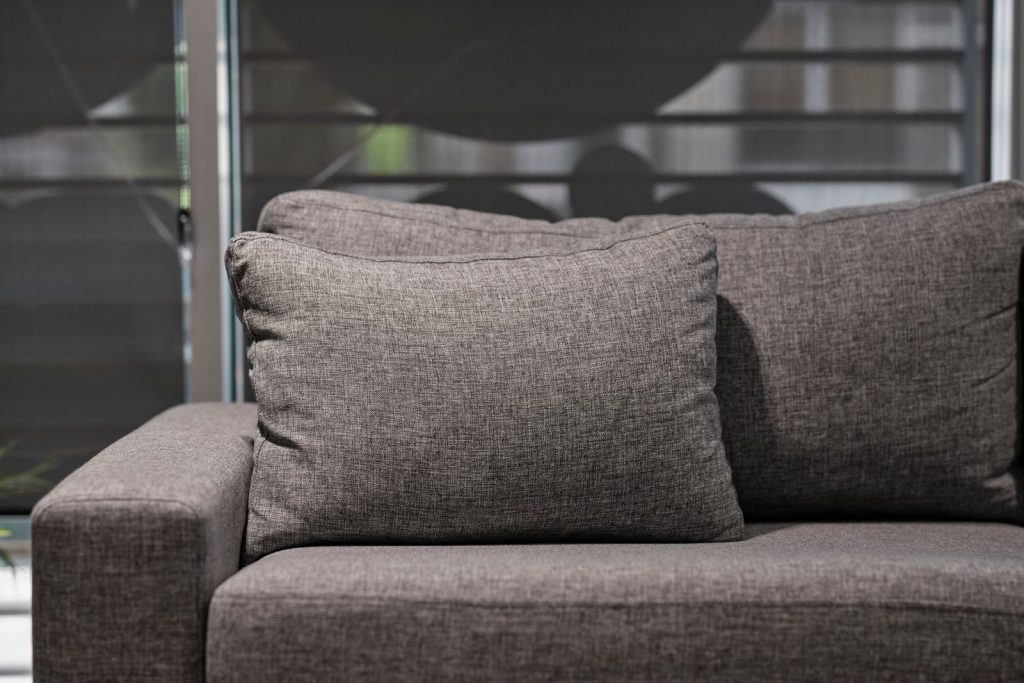
For commercial upholstery care, we choose the cleaning method based on the fabric and how heavily soiled the furniture is. We use two main methods for fabric sofas and office seating:
| Method | When It Is Used | How It Cleans |
| Dry Shampoo Encapsulation | Routine maintenance and lighter soiling | A low-moisture treatment removes embedded dirt with little to no drying time, so the upholstery can be used again soon after cleaning. |
| Deep Extraction Cleaning | Heavier soiling and stubborn stains | A pre-spray loosens the affected areas before a high-powered rinse and extraction removes dirt and cleaning agents. |
Deep extraction is used when surface cleaning is no longer enough. Our extraction equipment removes loosened dirt and cleaning agents from the upholstery, helping to minimise residue after cleaning.
Get Your Office Upholstery Professionally Cleaned by ESP Cleaning Services
When vacuuming and spot cleaning are no longer enough, we can take care of the deeper cleaning for your office furniture. We clean reception sofas and couches, dining-area benches, executive chairs and other upholstered seating, selecting the method according to the fabric, condition and level of soiling.
To fit around your business hours, we offer flexible scheduling, including after-hours and weekend arrangements, and use eco-friendly, chemical-safe cleaning products suitable for commercial spaces. We also stand by our on-time guarantee: if our team is late, your next cleaning session is free.
For help with office cleaning, contact ESP Cleaning Services for a non-obligatory quotation based on the furniture you need cleaned and its current condition.